
If you are exploring visual services for an event, workshop, or communication project, it helps to understand which type of support is the best fit. Three services clients often ask about are graphic recording, studio work, and visual facilitation. They are related, but each serves a different purpose.
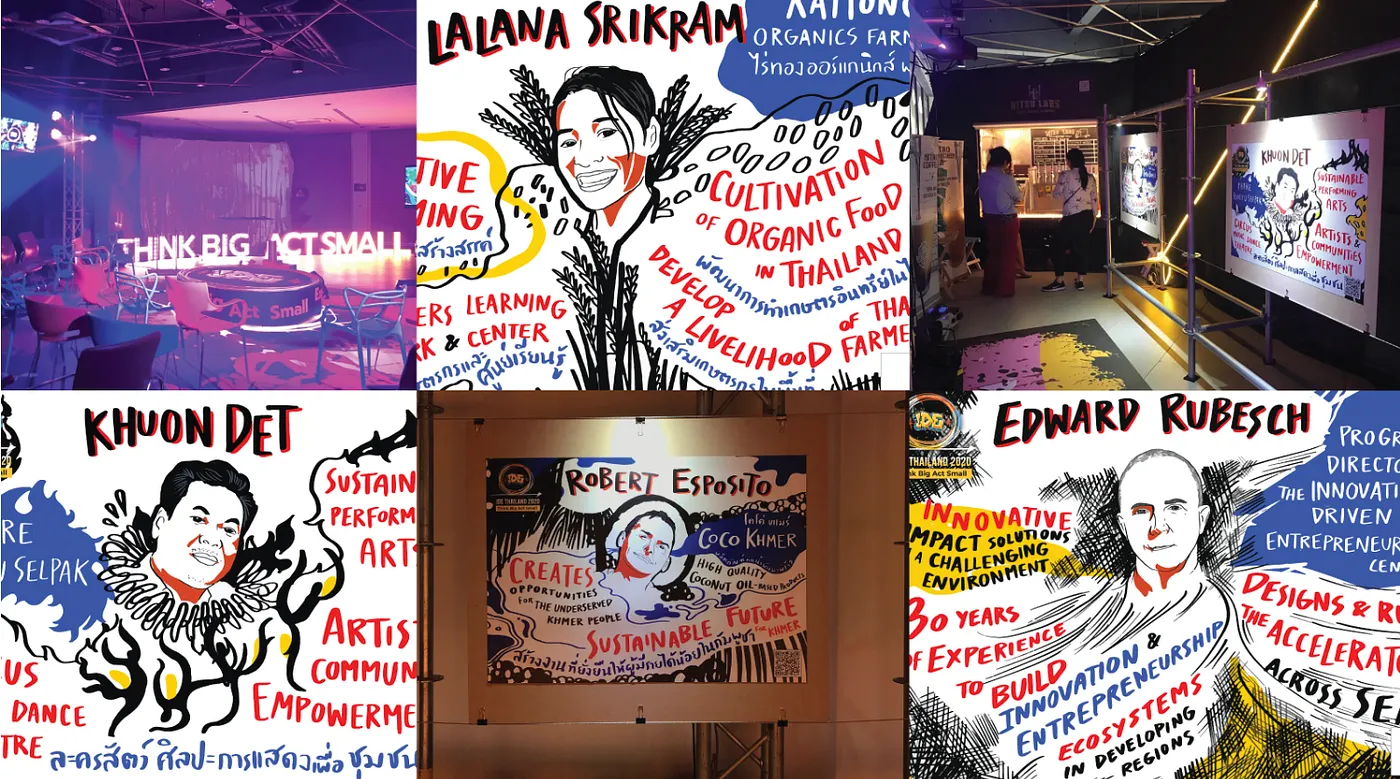
Graphic recording is a live visual capture service. It involves listening to presentations, discussions, or group conversations in real time, then translating key ideas into drawings, words, and visual structure on a large surface.
This is often used in settings such as keynote sessions, conferences, panel discussions, strategy meetings, or workshops. Although preparation is important beforehand, the work itself happens live during the event.
A good graphic recorder does much more than draw. The role also requires close listening, rapid synthesis, and the ability to identify what matters most in the moment. The final output is engaging, memorable, and highly visible to participants. It may not have the polished finish of a studio-designed illustration, but that is not the point. Its strength lies in making live conversations visible, understandable, and easier to remember.

Studio work is the right choice when the visual needs to be developed carefully outside the live event setting. This type of work allows more planning, refinement, revision, and collaboration throughout the process.
Clients usually choose studio work when they want cleaner layouts, more polished visuals, tighter control over wording, or several rounds of feedback before the final version is completed. Examples include infographics, visual summaries, presentation slides, launch materials, workshop recap visuals, and other communication assets created after the event or independently from one.
Studio work is not created in real time. It is produced through a design process, which means there is more room to shape structure, edit details, and refine the overall look and feel. When a live graphic recording is later cleaned up, redrawn, or polished for wider distribution, that part also falls under studio work.

Visual facilitation uses visuals not only to capture information, but to support thinking, participation, and learning. It can involve templates, frameworks, boards, or live visual tools designed to help individuals or groups reflect, discuss, generate ideas, or make sense of complexity together.
This kind of work usually requires more intentional planning with the facilitator, trainer, or workshop designer. The visuals are created not just as outputs, but as part of the process itself. In other words, they help people move through an activity, not simply record what happened afterward.
Visual facilitation is especially useful in workshops, learning sessions, co-creation processes, and team conversations where interaction and shared understanding matter. It is also closely connected to learning experience design.
A simple way to think about it is this:
In some projects, these services can also be combined. For example, a workshop may include live graphic recording during the session, followed by studio refinement afterward, while also using visual templates to support participation along the way.
If you are considering one of these options and are not sure what would suit your event or project best, feel free to get in touch.


